Introduction
Running a business means juggling countless moving pieces. Orders come in, inventory moves, customers need answers, payroll runs, financial reports pile up. It's a constant stream of information that demands your attention.
But here's the problem: as your business grows, the tools that got you here start to fail you. Spreadsheets become unwieldy. Different departments work from conflicting versions of the truth. Someone's always asking "Can you send me that file?" Critical decisions get made on outdated information. Your teams spend half their day hunting for data instead of actually using it.
Sound familiar? This is exactly where most growing businesses hit a wall—and where an ERP system changes the game.
Table of Contents
- What Is an ERP, Really?
- Who Actually Benefits from an ERP?
- Why This Actually Matters: The Real Benefits
- The Warning Signs: Does Your Business Need an ERP?
- Conclusion
What Is an ERP, Really?
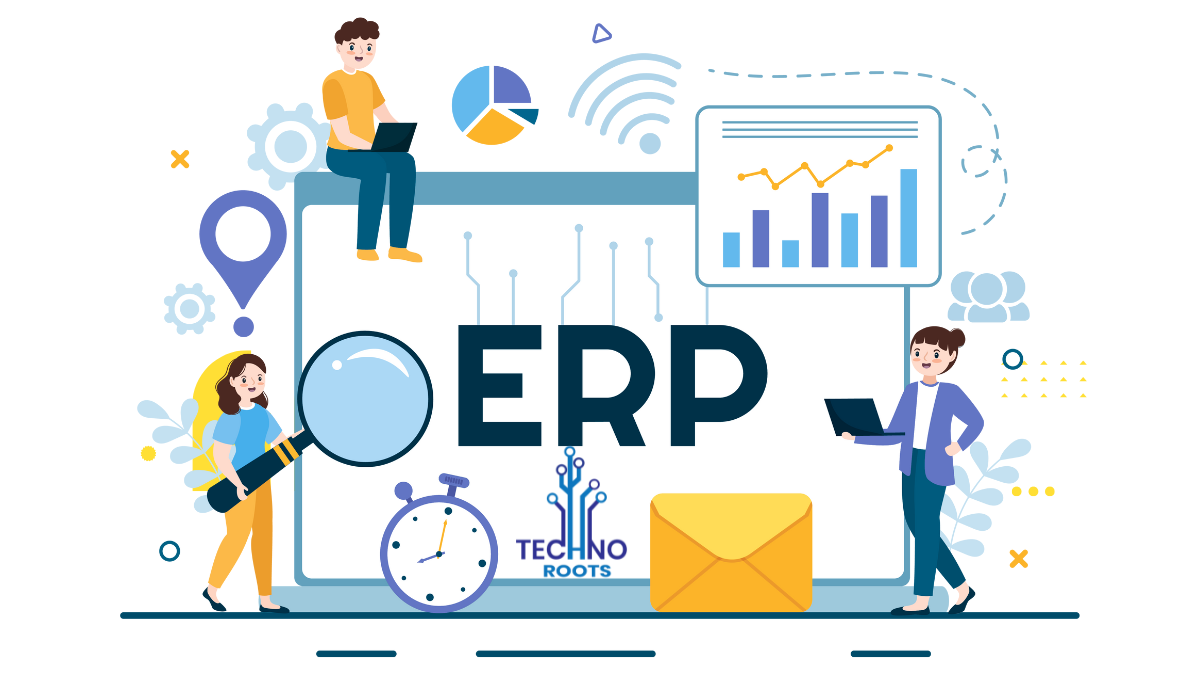
An ERP (Enterprise Resource Planning) system is an integrated software platform that consolidates all your core business operations into one unified system. Instead of using separate tools for finance, inventory, sales, HR, and operations, an ERP connects everything together.
Think of it this way: **An ERP is your business's central nervous system.** It's how every department—sales, finance, operations, HR—stays connected, works with the same information, and operates in sync.
What Can an ERP Actually Do?
A modern ERP typically includes these core modules:
- Finance & Accounting — Automate invoicing, manage accounts payable and receivable, track cash flow, and generate financial reports instantly.
- Inventory & Warehouse Management — See exactly what you have, where it is, and when you need to reorder. No more guessing or overstocking.
- Sales & Distribution — Process orders faster, track shipments, and give customers real-time visibility into their purchases.
- Procurement — Streamline purchasing, manage vendor relationships, and control costs across the board.
- Human Resources & Payroll — Manage employee data, automate payroll processing, track time, and ensure compliance.
- Production/Manufacturing — Plan production schedules, track work orders, manage resources, and optimize your production line.
- Asset Management — Track company assets, schedule maintenance, and extend equipment life.
- Contract Management — Centralize contracts, track obligations, and never miss a deadline.
- Transport & Logistics — Optimize shipping routes, track deliveries, and reduce transportation costs.
- Reporting & Analytics — Turn raw data into actionable insights with customizable dashboards and real-time reports.
The real power? These modules don't work in isolation. They talk to each other. When sales enters an order, inventory automatically updates. When inventory drops, procurement gets a heads-up. When a product is manufactured, costs flow directly to finance. Everyone works from the same data, in real time.
Who Actually Benefits from an ERP?
ERPs are particularly valuable for businesses that are experiencing any of these challenges:
- Growing transaction volumes — If you're processing hundreds or thousands of transactions daily and your current systems are struggling to keep up, an ERP handles scale without breaking.
- Complex supply chains or operations — Manufacturing, retail, distribution, and logistics businesses benefit hugely because they're managing inventory, suppliers, production, and delivery simultaneously.
- Multi-location or multi-department operations — The bigger and more spread out your organization, the harder it is to keep everyone aligned. An ERP solves this.
- Data accuracy issues — If you're constantly finding errors, duplicates, or conflicting information between systems, an ERP creates a single source of truth.
- Heavy reliance on spreadsheets — If your business is running on hundreds of interconnected spreadsheets that break whenever someone makes a mistake, it's time for an upgrade.
- Manual processes eating up time — When your team spends more time entering data and running reports than actually serving customers or driving strategy, automation becomes essential.
Industries That See the Biggest Impact
While ERPs were once reserved for massive enterprises costing hundreds of thousands to implement, modern cloud-based systems like Technoroots ERP have democratized access. Today, businesses of virtually every size and industry benefit from integrated systems.
- Manufacturing & Production — Manage complex bill of materials, production schedules, quality control, and material flow across the shop floor. Real-time visibility into work-in-progress inventory prevents costly delays and helps meet customer deadlines accurately.
- Retail & Ecommerce — Sync inventory across multiple sales channels (online, physical stores, marketplaces), automate reordering, and track customer purchasing patterns. An ERP prevents overselling and stockouts that kill customer satisfaction and revenue.
- Construction & Real Estate — Track project costs in real-time, manage subcontractors, control material procurement, and ensure projects stay on budget. Construction projects are notoriously complex—an ERP brings order to the chaos.
- Energy & Utilities — Manage assets across geographically dispersed locations, schedule maintenance, track compliance requirements, and optimize resource allocation. Critical infrastructure demands precision and accountability.
- Food & Beverage — Handle lot traceability (critical for recalls), manage expiration dates, control production workflows, and maintain quality standards. Food safety regulations demand perfect record-keeping that manual systems can't deliver.
- Healthcare & Pharmaceuticals — Manage inventory with strict compliance requirements, track medications and medical supplies, handle expiration protocols, and ensure patient data security. Mistakes here can literally impact lives.
- Hospitality & Tourism — Coordinate reservations, manage housekeeping schedules, track maintenance across properties, control food and beverage inventory, and manage staff across multiple locations. With thin margins, operational efficiency is everything.
- Professional Services — Track project profitability, manage billable hours, allocate resources across multiple clients, and automate invoicing. For service firms, project visibility directly impacts margins and growth.
- Wholesale, Distribution & Logistics — Manage high-volume inventory across multiple warehouses, optimize shipping routes, track orders through fulfillment, and coordinate with suppliers. Speed and accuracy are competitive advantages.
What Ties Them Together? Each industry faces the same core challenge: complexity that spreadsheets and disconnected systems simply can't handle. They're managing multiple interconnected processes simultaneously. One mistake cascades. Information delays cost money. Manual work slows everything down.
They all need a system that brings order to chaos—where every team member has access to the same current information, processes run automatically instead of manually, and leaders can see exactly what's happening across their entire operation in real-time.
That's what Technoroots delivers, whether you're a 20-person manufacturing shop, a 100-location retail chain, or a distributed logistics network.
Why This Actually Matters: The Real Benefits
- One Unified Platform Ends Information Chaos
Here's what disconnected systems create: duplicate data entry, conflicting information, slow decision-making, and teams that don't trust their own data.
A manufacturing company might have inventory managed in one system, sales orders in another, and accounting in a third. The warehouse says there are 500 units. The sales team thinks there are 600. Finance is tracking something different entirely. Someone makes a bad business decision based on incomplete information.
An ERP eliminates this. Every department works with the same real-time data. Finance sees exactly what the warehouse sees. Sales knows the exact inventory position. Manufacturing knows what's ordered. There's no guessing, no reconciliation, no wasted time on conflicting information.
- Automation Transforms How Work Gets Done
Most businesses still run on manual processes: data entry, invoice processing, payroll calculations, report generation. These tasks consume time and create errors at scale.
An ERP automates the repetitive work. Invoices generate automatically from orders. Inventory updates in real time as items move. Payroll processes at the click of a button. Reports build themselves from live data. This doesn't just save time—it frees your teams to do work that actually moves your business forward: strategy, customer service, innovation.
A logistics company that manually reconciled shipments could take hours per day. An ERP automates this entirely, cutting hours to minutes and eliminating the human error that costs money every single day.
- Real-Time Visibility Transforms Decision-Making
Operating a business without reliable data is like flying blind. Most business leaders get financial reports weeks after the month ends. By then, decisions have already been made.
An ERP puts dashboards in front of you that show:
- Profitability in real time—which products, customers, or locations are actually profitable?
- Inventory status across all locations—exactly what you have, what's moving, and what's stagnating.
- Sales performance day-by-day—which sales channels or teams are delivering?
- Cash flow immediately—understand your actual cash position, not your accounting position.
- Production timelines live—see bottlenecks before they become problems.
- Employee productivity transparently—who's performing well and where are the gaps?
This transforms decision-making from reactive to strategic. Instead of making your best guess, you're making informed decisions backed by real data.
- Cost Savings That Add Up Fast
When you centralize operations, the cost benefits are significant:
- Reduced errors — Manual work creates mistakes. Wrong inventory counts lead to overstocking or stockouts, both expensive. Wrong invoices delay payment. An ERP drastically reduces these costly errors.
- Better inventory control — You stop overstocking items that don't sell and running out of items that do. This frees up working capital and improves cash flow.
- Streamlined processes — Fewer systems means fewer handoffs, less duplicate work, fewer bottlenecks. Efficiency compounds.
- Less downtime — When operations are integrated, things run smoother. There's less time spent troubleshooting system issues or waiting for information.
- Improved productivity — Your team spends less time on admin and more time on revenue-generating work.
Many companies see their investment in an ERP pay back within 12-24 months through efficiency gains alone.
- Your Business Grows Without Growing Chaos
As you scale, most systems eventually fall apart. What worked for 10 employees breaks at 50. What worked at one location fails at five.
A good ERP grows with you. You can add more users, bring in additional modules, scale to new locations, integrate new business units, all without rebuilding your infrastructure. You're not constantly switching systems as you grow—you're just expanding the one that's already working.
The Warning Signs: Does Your Business Need an ERP?
If any of these sound like your business, it's probably time:
- You're using too many disconnected systems — If your team uses five different tools that don't talk to each other, you're creating work, not eliminating it.
- Data is inconsistent or hard to find — If people can't find what they need or when they do, they can't trust it, something's broken.
- Reporting takes forever — If generating a financial report or inventory report means digging through multiple systems and manual combining, you're losing time daily.
- Inventory inaccuracies keep increasing — If physical inventory never matches what your system says, you have a control problem.
- You're heavily dependent on spreadsheets — If your business runs on interconnected Excel sheets that break easily and make scaling nearly impossible, you need a better foundation.
- Your team is drowning in repetitive work — If your people are spending 30% of their day on data entry and report generation, automation could transform productivity.
- Customer service is suffering because of operational issues — If you're slow to respond to customer requests because you can't quickly access information or process orders efficiently, your competition is beating you.
Conclusion
An ERP is no longer a business expense—it's a strategic advantage. The companies pulling away from their competition aren't necessarily the ones with more resources. They're the ones with better information, faster processes, and teams that can focus on driving growth instead of hunting for data.
If your business is showing any of these signs, the question isn't whether you need an ERP. It's when you can afford not to have one.
Ready to explore how an ERP could transform your business? Our experts at Technoroots can help you understand what a modern ERP could look like for your specific industry and operations. Let's talk about what's possible.